Turning a quiet Tuesday into a full room
The slow nights are the ones your regulars can fill. A warm, well-timed note is how you ask.
By TablestialPublished Updated
Contents
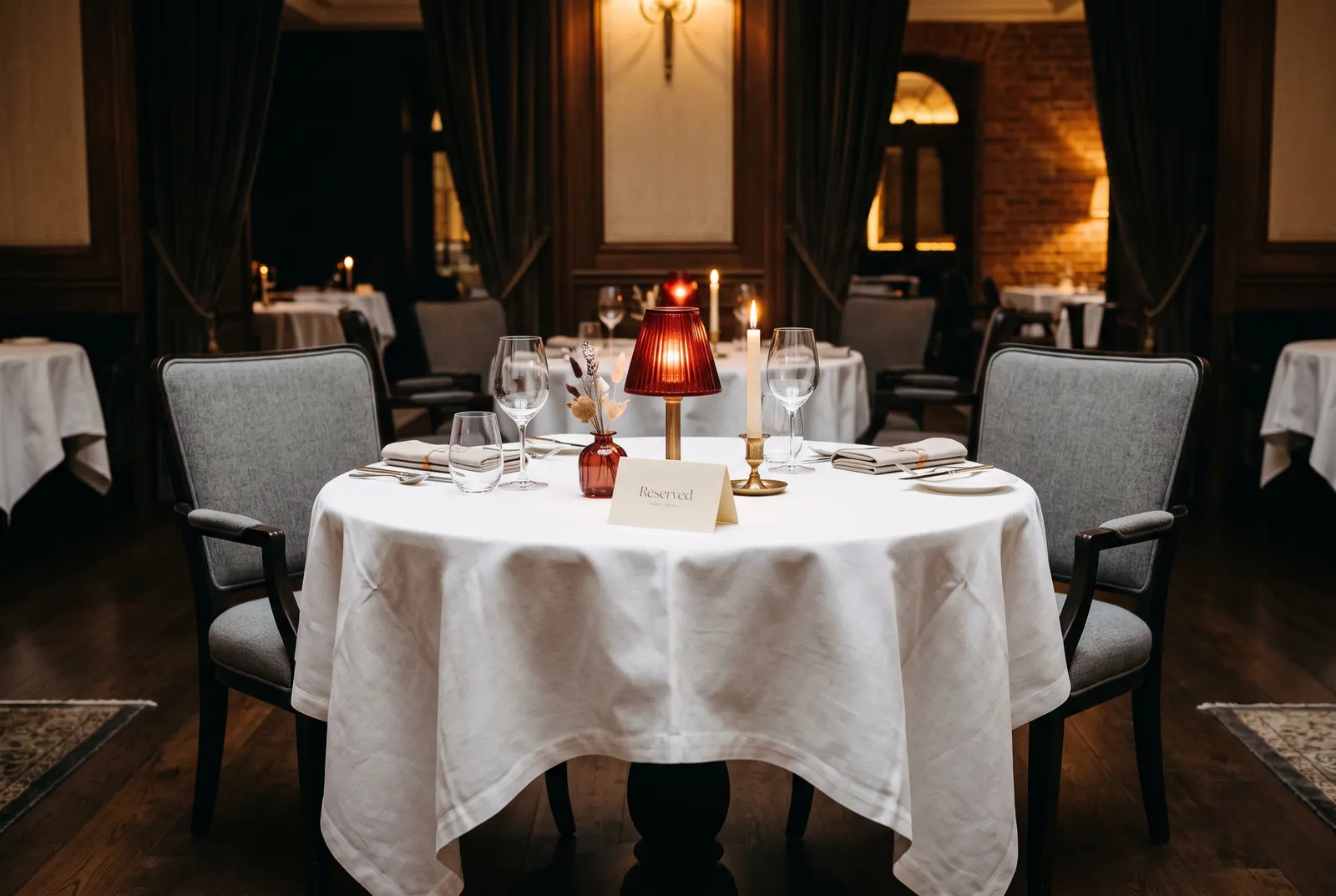
Every restaurant has one. Friday fills itself, often before the week has started. Saturday follows. Then there is the Tuesday: the kitchen prepped, the candles lit, the full team on the floor, and half the room still set and waiting at eight.
The usual responses are a discount or a post on social media. Both have a cost. A discount teaches guests that the restaurant is worth less on certain nights, and the ones who notice start waiting for it. A post mostly reaches people who already follow you and have already decided when they are coming. Neither is aimed at the person most likely to say yes.
Who actually comes on a Tuesday
New guests rarely choose a Tuesday. They book for occasions, and occasions land on weekends. The people who come midweek are the ones for whom the restaurant is already part of life: the regular who lives two streets away, the couple who find Friday too loud, the guest who likes the kitchen when it has time to breathe. The quiet night belongs to the people who already love the place.
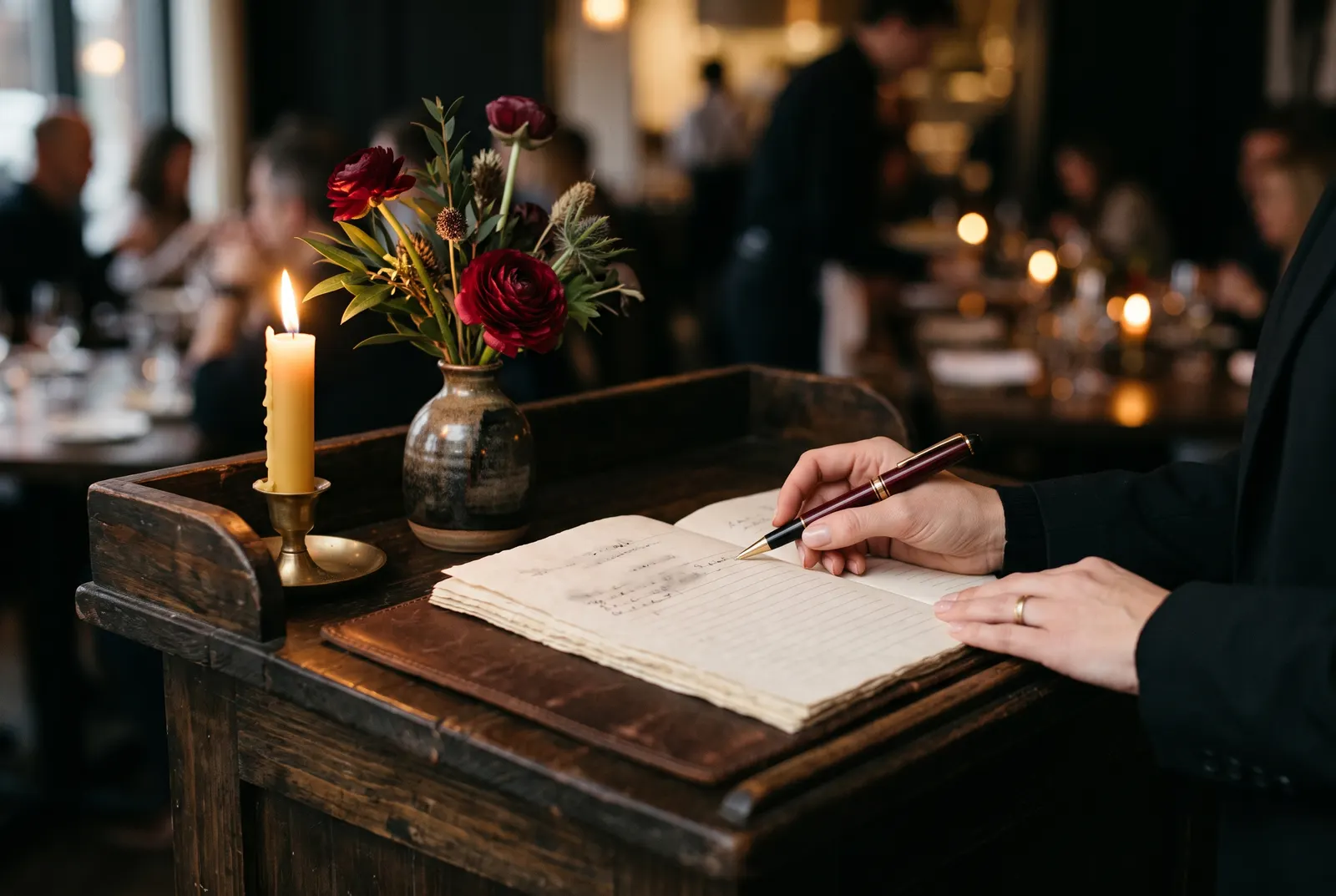
That changes the question. It stops being "how do we reach more people?" and becomes "who already likes us, and hasn't been in for a while?" The answer is sitting in your bookings. The hard part is getting it out. A booking system that keeps a guest book makes that list a search instead of a chore.
It is worth doing the exercise by hand once. Take the last few quiet evenings and read the names in the book. Most owners find the same faces again and again, and a handful they have not seen in months. Those missing faces are the list. They do not need convincing that the restaurant is good. They need a reason to remember it this week.
What a good nudge looks like
The message that works on a slow night has little in common with an advertisement. It reads like a note from the restaurant to someone it knows.
- It goes to the right people: guests who have been before, whose last visit was some time ago, and who have booked midweek in the past.
- It arrives with enough notice to plan around. A message at five for the same evening is noise. Sent a few days ahead, it is an invitation.
- It is written in the guest's own language and says something true: a new dish, the terrace open for one more week, a calmer room.
- It is rare. A regular who hears from you every week learns to ignore you.
- It makes booking easy: one link, straight to the evening, with the table still theirs to choose.
Notice what is missing. There is no discount. The reason to come on a Tuesday is that Tuesday is good. The kitchen has time, the host can talk, the room is quiet enough to hear the person across the table. For a certain kind of guest that is the best night of the week, and telling them so is simply honest.
See it on your own floor
Send a photo of your dining room and we bring your own tables to a 30-minute call.
Read platform →The part a system should carry
None of this is new. Good hosts have always phoned a few regulars when the book looked thin. The problem is discipline. Knowing who hasn't been in since spring, who prefers midweek, which language each guest likes to be written to in, sending the message a few days before the thin nights and never twice to the same person: that is memory work, repeated every week, and it lands on the people who are busiest on the nights that are full. It gets done in the first month and forgotten by the third.
This is exactly the kind of work software should take off a team's hands. It never forgets who came in April, and it does not mind doing the same careful thing every single week. The host keeps the part only a person can do: the welcome at the door.
It is also worth saying that some nights should stay quiet. The restaurant in our case study closes on Mondays, and its booking calendar simply never offers one. Closing a day on purpose is a decision, not a failure. A strong Tuesday and a closed Monday make a better week than two half-empty evenings, and a rested team is part of what makes the Tuesday strong.
In Tablestial this runs from the guest book. Every visit adds to a profile. A win-back email goes by itself to a guest who agreed to receive offers and has not been in for a set number of days, and you can send a campaign by email to every guest who agreed, on the nights you choose. Booking back in works the way it always does: on your own site, choosing a real table, on dates that follow your own trading hours. The automatic offers need nobody on the team to remember them. A campaign is yours to send.
A full Friday shows that a restaurant is popular. A full Tuesday shows that it is loved.